Upcoming Events | Past Events

Upcoming Events

Past Events
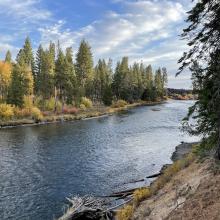
Image A partially obscured sunrise as seen from a hilltop on a foggy morning.
Feb 13
Ryan Rout (Postdoc, Allen Institute)
TBD
Image Zebrafish Groupie Meeting
Feb 12
Jen Phillips
Fish Groupie
Image Portrait of Jim Murray.
Feb 8
James Murray, PhD
Assistant Professor, Departments of Biology and Math
Mid-Tenure Review Talk "Computational approaches to implementing motor control in neural circuits"

Requests for accommodations related to disability should be made to the Department of Biology at 346-4502 as early as possible.

Murray Lab

Image Zebrafish Groupie Meeting
Feb 5
Stevie Schauer
Fish Groupie
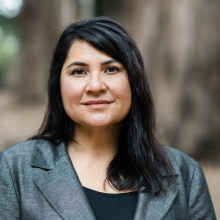
Image Portrait of Dr. Leenoy Meshulam, smiling with arms crossed looking straight at the camera in a blue sweater
Feb 1
CANCELLED - Leenoy Meshulam, PhD
Postdoctoral Scholar
Bridging scales in biological systems – from octopus skin to mouse brain

CANCELLED due to travel delays.  ION & Physics will announce when this seminar will be rescheduled.  ION & Physics members can join at 3:45pm for a social hour today 2/1 in the Willamette Atrium.

This seminar is being co-hosted with the UO Physics Colloquium series which is also held at 4pm on Thursdays. 

Abstract: 

For an animal to perform any function, millions of cells in its body furiously interact with each other. Be it a simple computation or a complex behavior, all biological functions involve the concerted activity of many individual units. A theory of function must specify how to bridge different levels of description at different scales. For example, to predict the weather, it is theoretically irrelevant to follow the velocities of every molecule of air. Instead, we use coarser quantities of aggregated motion of many molecules, e.g., pressure fields. Statistical physics provides us with a theoretical framework to specify principled methods to systematically ‘move’ between descriptions of microscale quantities (air molecules) to macroscale ones (pressure fields). Can we hypothesize equivalent frameworks in living systems? How can we use descriptions at the level of cells and their connections to make precise predictions of complex phenomena? My research focuses on the theory, modeling, and analysis required to discover generalizable forms of scale bridging across species and behavioral functions. In this talk, I will present lines of previous and ongoing research that highlight the potential of this vision. I shall focus on two seemingly very different systems: mouse brain neural activity patterns, and octopus skin cells activity patterns. In the mouse, we reveal striking scaling behavior and hallmarks of a renormalization group- like fixed point governing the system. In the octopus, camouflage skin pattern activity is reliably confined to a (quasi-) defined dynamical space.  Finally, I will touch upon the benefits of comparing across animals to extract principles of multiscale function in biological systems, and discuss potential avenues of investigation that could allow us to decipher how macroscale properties, such as memory or camouflage, emerge from microscale level activity of individual cells. 


Bio:
Leenoy Meshulam is a Swartz Theory fellow at the University of Washington, and a Burroughs Wellcome CASI awardee. Her research interests are at the intersection of neuroscience and physics. Her current focus is on developing coarse-graining schemes for nervous systems across species to achieve compact, simple descriptions, and provide quantitative predictions of the system’s behavior. Previously, Leenoy received her PhD from Princeton University, where she constructed simplified computational models to investigate the collective nature of neural activity in the hippocampus.

Image A partially obscured sunrise as seen from a hilltop on a foggy morning.
Jan 30
Nick Sattler
Natural behavior of freely-moving mice and cortical theta oscillations
Image Portrait of Dr. Karel Svoboda, smiling and looking directly at the camera, image courtesy of AllenInstitute.org
Jan 25
Karel Svoboda, PhD
Executive Vice President, Director of Allen Institute for Neural Dynamics
Neural mechanisms underlying planning and movement
Image Flyer image for Jordan Munroe's thesis defense
Dec 1
Jordan Munroe
PhD Candidate
PhD Final Oral Defense: "The RNA-binding protein, Imp, generates neural diversity in the Drosophila type 2 neuroblast lineage"
Image Portrait of Dr. Alice Mosberger
Nov 30
Alice Mosberger, PhD
Postdoctoral Fellow in the Neurobiology of Action Lab at the Zuckerman Institute
How are reaches to spatial targets learned? A mouse model to dissect sensorimotor control of forelimb reaches

Abstract:  Mammals learn a large repertoire of novel actions by refining variable movements into precise skills. The brain achieves this by assigning credit to movements that led to desired outcomes. Even for simple actions such as reaching to a spatial target, the brain could assign credit to the direction, endpoint target location, speed, etc. As such, different movement strategies may emerge across individuals, depending on what is assigned with credit.My goal is to dissect the sensorimotor areas controlling different aspects of these movements, and probe what determines the learning of different reach strategies.I developed a behavior task in which head-fixed mice generate exploratory forelimb trajectories with a joystick and are rewarded when they hit a covert target in the workspace. As mice learn, they refine their reaches which become less variable in direction, tortuosity, speed, and targeting precision. We show that different aspects of the reach such as direction or speed are learned and controlled through distinct cortical and thalamic networks. For instance, sensorimotor cortex is required to generate reaches with high directional variability across different positions of the workspace, while a specific nucleus of thalamus is required to refine the overall reach direction.

But what reach strategies are mice learning? By relocating the start position in a small number of probe trials I discovered that some animals learned a direction-based strategy (move in the same initial direction from new starts), while others learned an endpoint-based strategy (guide the joystick into the target from new starts, adjusting their direction). Which strategy an individual animal learned correlated with the degree of spatial directional variability during exploration, the aspect of the reach controlled by cortex. We find that when we train reinforcement learning model agents in a similar task they also show this relationship between exploration and endpoint- vs. direction-learning bias. Overall, these findings suggest that the sensorimotor system learns different control strategies by exploring and reinforcing certain movement aspects during learning, and these aspects are likely generated by distinct circuits.

Image NCB logo
Nov 28
Presenter: Mae Guthman (Princeton, hosted by E Sylwestrak)
Rethinking the Hormone-sensitive Social Behavior Network as the Proactive Social Behavior Network