
Upcoming Events
Past Events

Dr. Bower is a computational neurobiologist who received his PhD in neurophysiology at the University of Wisconsin-Madison, and completed postdoctoral studies at New York University and the Marine Biological Laboratory in Woods Hole, Massachusetts. His first faculty appointment was at the California Institute of Technology (Caltech), where for over 17 years he helped found the first graduate program in computational neuroscience. Subsequent to Caltech, he was a professor of Computational Neuroscience within the University of Texas System.
In addition to model and experimental based research on the olfactory system and cerebellum, Dr. Bower’s laboratory has also been involved in numerous infrastructure projects, including constructing GENESIS, one of the first simulation platforms supporting detailed models of neuronal structures. Dr. Bower also founded the annual international conference on Computational Neuroscience, the first summer courses in computational neuroscience in the United States, Europe and Latin America, and the Journal of Computational Neuroscience. Dr. Bower was also involved in the re-emergence of neural networks, co- organizing the first NIPS meeting, (recently re-named NEurIPS), which has become one of the largest and most important annual meetings in Machine Learning. Dr. Bower is the author of many scientific research articles and has edited and written numerous books. While he is now officially retired, he remains an affiliate faculty member at Southern Oregon University and the University of Hertfordshire in the UK.
In addition to his work in science, Dr. Bower has also had a long-standing interest and involvement in science education and digital-based educational innovation. While a professor at Caltech, Dr. Bower founded and for 17 years co-directed the Caltech Precollege Science Initiative (CAPSI) a multi-million-dollar hands-on science education outreach program to majority minority school districts in the State of California. While supporting the introduction of hands-on science learning in public schools, Dr. Bower’s efforts in CAPSI also explored the use of digital technology in support of science learning. In 1998 Dr. Bower founded Numedeon Incorporated, which in 1999 launched Whyville.net the first game-based learning virtual world. Whyville now has over 8.5 million cumulative registered users worldwide. In 2014, Dr. Bower founded the company Virtual Worlds IP, intended to support the wider application of the simulation-game-based virtual world learning engine developed using Whyville. That technology is protected by a core and foundation patent in online virtual worlds (US patent # 7,925,703).

This seminar has been postponed due to unforseen circumstances. Please stay tuned for a rescheduled date for Dr. Saxena's visit!
Abstract: Our ability to record large-scale neural and behavioral data has substantially improved in the last decade. However, the inference of quantitative dynamical models for cognition and motor control remains challenging due to their unconstrained nature. Here, we incorporate constraints from anatomy and physiology to tame machine learning models of neural activity and behavior.
How does the motor cortex achieve generalizable and purposeful movements from the complex, nonlinear musculoskeletal system? I will introduce a deep reinforcement learning framework that trains recurrent neural network controllers to generate purposeful movements in anatomically accurate macaque and mouse musculoskeletal models. This framework mirrors biological neural strategies and aids in predicting and analyzing novel movements. Next, I will discuss ongoing work on integrating region-specific constraints in models of the cortico-basal ganglia-thalamic loop during timing tasks to gain insights into pathway-specific computations. Through these projects, we show that a constraints-based modeling approach allows us to predictively understand the relationship between neural activity and behavior.
Bio: Shreya Saxena is broadly interested in the neural control of complex, coordinated behavior. She is currently an Assistant Professor of Biomedical Engineering at the Center for Neurocomputation and Machine Intelligence at the Wu Tsai Institute at Yale University. During Shreya’s postdoctoral research at the Center for Theoretical Neuroscience at Columbia University’s Zuckerman Mind Brain Behavior Institute, she developed machine learning methods for interpretable modeling of neural and behavioral data. Her PhD in the Department of Electrical Engineering and Computer Science at the Massachusetts Institute of Technology (MIT) dealt with performance limitations in sensorimotor control. Shreya received an M.S. in Biomedical Engineering from Johns Hopkins University, and a B.S. in Mechanical Engineering from the École Polytechnique Fédérale de Lausanne (EPFL). She is honored to have been selected as a Rising Star in both Electrical Engineering (2019) and Biomedical Engineering (2018).
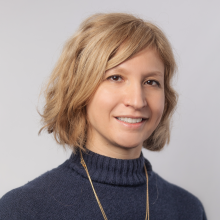
Kira Poskanzer is a Founder-in-Residence at Arcadia Science, a biotech company transforming evolutionary innovations into therapeutic solutions. She also holds an appointment as an Associate Professor at the University of California, San Francisco (UCSF) in the Department of Biochemistry & Biophysics, where her lab studied circuit-level dynamics of astrocytes and neurons in the mammalian cerebral cortex using multi-photon imaging and electrophysiology. At Arcadia, Dr. Poskanzer is leading a translational group developing neuro-immune therapeutics based on molecules found in tick saliva. This early-stage venture aims to be Arcadia's first independent spin-out company. Dr. Poskanzer will talk about transitioning from academia to industry, working at an experimental research organization, balancing open and translational science, and building an early-stage startup.
Arcadia Science Ticks as treasure troves

Success in life, for humans and all animals, requires multitasking. Multitasking — the simultaneous execution of two or more behaviors by a single agent — may at times seem effortless and safe, such as walking and talking, or challenging and potentially fatal, such as driving and texting. Performance differences between different multitasking contexts are likely reflected in the cognitive demands of the constituent behaviors, yet the neural substrates that facilitate or constrain multitasking remain unknown. Here I develop a research program to investigate the neurogenetic control of multitasking in the model system Drosophila which has a rich repertoire of complex behaviors, a relatively simple nervous system, and an extensive toolset for precise neurogenetic experimentation.
*Note the retreat is a multi-day event with multiple locations starting at Noon on Friday 9/20
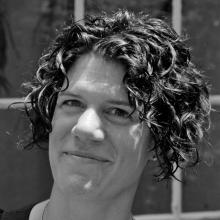
Abstract: Animals must carry out a variety of goal-directed behaviors on a continuous basis in order to meet multiple needs that are time-varying, time-sensitive, and survival-essential. These needs include for example obtaining food and water, finding shelter, defending territory, positive social interactions, and sleeping. The actions required to pursue these goals are often mutually exclusive. Regulating behavior therefore requires assessing the urgency and importance of various needs as well as weighing evidence about the likely outcomes of possible behaviors. Often animals must commit to discrete actions in the face of unresolved or unresolvable uncertainty or ambivalence. In this talk I will define "decision" as the goal-directed selection among alternative potential actions, without necessarily implying deliberation or even conscious awareness. I will describe three different kinds of decisions rats make in the context of one artificial operant task: interpreting internal state and experienced reward rates to decide whether it is worth performing an effortful activity to gain water; interpreting ambiguous sensory stimuli to decide which among alternative behavioral targets is most likely to yield water; and (I will suggest) determining the extent to which sensory decisions are ruled by bottom-up or top-down processing of information.
The Reinagel Lab at UCSD

ION Spring Rotation Talks
Wednesday, June 12 from 9:00 AM to 11:30 AM
Host: Shawn Lockery (ION)
9:00 AM - Christopher Fields Sylwestrak
9:15 AM - Kasey Drake - Miller
9:30 AM - Tim Reizis - Jaramillo
9:45 AM - Praves Lamichhane - Jaramillo
10:00 AM - JoAnna O’Neill - Jaramillo
10:15-10:30 BREAK
10:30 AM - Abbi Koenigsmark - Postlethwait/Washbourne
10:45 AM - Jackie Kuyat - McCormick
11:00 AM - Michelle Ortman - Grimes
11:15 AM - Max Horrocks - Grimes
Abstract:
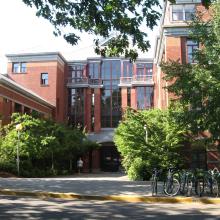
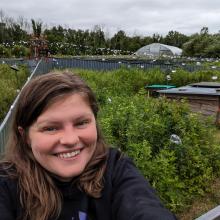
House mice (Mus musculus) are omnivores and have an innate predatory instinct for small invertebrates like crickets. Our lab is interested in the evolutionary, behavioral, and neural mechanisms underlying hunting behaviors. In this talk, I will discuss the lab's neuroethological approaches to studying hunting at multiple levels: in feral mice on Skokholm island, free-living “re-wilded” lab mice in large outdoor enclosures, and in the lab. I will spend the majority of the time talking about our lab work, where we have created a large arena where we hide crickets and let our mice find them using auditory cues (chirps), focusing on what we have learned from our first cohorts of animals, and where we’re headed next
www.janelia.org/lab/dennis-lab