Upcoming ION Seminars

Image Students walk under the branches of a vibrant green tree on a sunny day.
Mar 26
No ION Seminar
UO Spring Break
Location: Time: 4:00 pm
Image Dr. Matt Wachowiak
Apr 2
Matt Wachowiak, PhD
Professor - Department of Neurobiology
University of Utah
"Untangling the tuning, timing and topography of odor representations in the mouse olfactory system"
Host: Matt Smear
Location: Willamette 110, remote via Zoom Time: 4:00 pm

Abstract: Odors – chemical signals from the environment – are primary sensory drivers of behavior in most animal species and provide information essential to survival. In mammals, olfactory sensation is linked to inhalation, which delivers external odorants to olfactory sensory neurons (OSNs). There is strong evidence that both the identity of OSNs activated by an odorant and their timing of activity relative to inhalation are important features of the neural mechanisms underlying olfactory sensation, but how such features are determined by odor identity, odor concentration and odor sampling (i.e., inhalation) remains unclear. In this seminar, I will review work from our laboratory that characterizes the determinants of OSN responses across a large fraction of the sensory neuron population in vivo, as well as the transformation of sensory input patterns by olfactory bulb circuitry. This work has led to the surprising conclusion that the rapid conversion of one odorant to another by nasal enzymes profoundly shapes neural representations of odor identity and underlies much of the diversity in temporal dynamics of sensory responses. I will discuss the implications of these results for reconsidering the role of timing in odor coding and the potential for external versus internally-generated odors to differentially drive sensation and behavior.

Image A partially obscured sunrise as seen from a hilltop on a foggy morning.
Apr 9
Katie Drerup, PhD
Associate Professor
University of Wisconsin-Madison
"Mitochondrial biogenesis in neurons: regulation, location, and functional consequences"
Host: Adam Miller
Location: Willamette 110, remote via Zoom Time: 4:00 pm
Image A partially obscured sunrise as seen from a hilltop on a foggy morning.
Apr 16
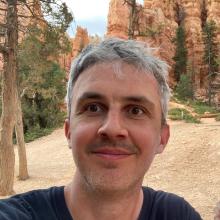
Tim Hanson, PhD
TBA
Host: Tim Gardner
Location: Willamette 110, remote via Zoom Time: 4:00 pm
Image A partially obscured sunrise as seen from a hilltop on a foggy morning.
Apr 23
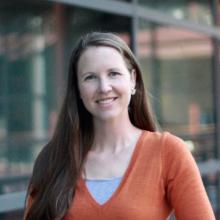
Nathaniel 'Nate' Sawtell, PhD
Professor of Neuroscience
Columbia University
Takahashi Neuroethology Lecture
Host: Kip Keller
Location: Willamette 110, remote via Zoom Time: 4:00 pm

Sawtell Lab

The goal of research in the Sawtell laboratory is to forge detailed links between the properties of neural circuits and their functions. Our studies of weakly electric fish have shown how a specific form of synaptic plasticity operating within a well-characterized cerebellum-like circuit functions to predict and cancel out sensory inputs generated by the animal’s own behavior. Such a process could allow behaviorally relevant sensory inputs, e.g. those generated by predators or prey, to be processed more effectively. This work provides a mechanistic account of how copies of motor commands are transformed into specific predictions of sensory events as well as insights into the function of the cerebellar granular layer. A tight coordination of experimental and theoretical approaches is a key aspect of the lab’s approach. Experimental work involves intra- and extracellular recordings from identified neuron classes in awake, behaving fish. Theoretical work is performed in collaboration with Larry Abbott’s group at the Center for Theoretical Neuroscience at Columbia University.

Image A partially obscured sunrise as seen from a hilltop on a foggy morning.
Apr 30
Katie Kindt, PhD
Investigator
National Institute on Deafness and Other Communication Disorders
"Watching Sensory Synapses Form: Live Imaging of Genetic and Activity-Driven Assembly"
Host: Adam Miller
Location: Willamette 110, remote via Zoom Time: 4:00 pm

Abstract: Sensory hair cells transmit auditory and vestibular information to the brain. While many forms of hearing loss result from hair cell death, increasing evidence shows that noise-induced and age-related hearing loss often stem from synaptic damage. Restoring hearing in these cases will require rebuilding synaptic connections, which depends on understanding how sensory synapses form and function in vivo. Our work combines genetics, CRISPR-based mutagenesis, and live imaging in zebrafish neuromast hair cells to define themolecular and activity-dependent mechanisms that drive synapse formation, function, and regeneration. By visualizing synapses in a live, transparent system, we aim to uncover principles that guide the restoration of hair cells and their synaptic connections after damage.

Katie Kindt, Ph.D.

Image Dr. Yi Zuo sitting at a microscope
May 7
Yi Zuo, PhD
Professor of Molecular, Cell & Developmental Biology
University of California, Santa Cruz
The dynamic brain: Understanding the synaptic basis of behavior
Host: Cris Niell
Location: Willamette 110, remote via Zoom Time: 4:00 pm
Image A partially obscured sunrise as seen from a hilltop on a foggy morning.
May 14
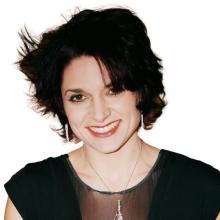
Mario Dipoppa, PhD
Assistant Professor
University of California, Los Angeles
TBA
Host: James Murray
Location: Willamette 110, remote via Zoom Time: 4:00 pm
Image A partially obscured sunrise as seen from a hilltop on a foggy morning.

May 21
Marcus Benna, PhD
Assistant Professor
University of California, San Diego
TBA
Host: James Murray
Location: Willamette 110, remote via Zoom Time: 4:00 pm
Image A partially obscured sunrise as seen from a hilltop on a foggy morning.
May 28
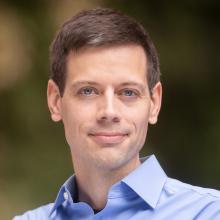
Kathleen Cullen
TBA
Host: Matt Smear
Location: Willamette 110, remote via Zoom Time: 4:00 pm

Seminar Details

This academic year will host a series of virtual and in person seminars with live, remote access via Zoom. ION Seminars are open to the University of Oregon community and in person attendance is welcome.  In person seminars will be held in Willamette 110 at 4 PM PT. 

To accommodate remote speakers and time differences, some seminars may be offered at Noon PT or another agreed upon time.  For students taking BI 407/507 Neuroscience Seminar please contact the course instructor to access recordings as needed. 

Details for upcoming seminars will be shared here on the ION website as well as through our ION mailing lists.  Links for remote access via Zoom will be available only through ION Seminar mailing list and those not on the list can request access by contacting Jenna Penny with their uoregon.edu email address. 

Joint science Seminars