
Upcoming Events


Please attend activities hosted during the University of Oregon Undergraduate Research Symposium.
Past Events
Oligodendrocyte development, cell biology, and disease
Gut-brain communication development, genomic mosaicism, and disease

Wednesday, December 10, 2025 | 177 Lawrence Hall
- IEE 1:00PM-2:00PM
- ION 2:00PM-3:00PM
ION, Host: Shawn Lockery
- 2:00 PM Ramzy Al-Mulla Jaramillo (ION)
- 2:15 PM Hylen James Jaramillo (ION)
- 2:30 PM Will Gaston Sylwestrak (ION)
- 2:45 PM Alanna Sowles Smear (ION/PSYCH)
We are having a Holiday Party. Tuesday, December 9th from 4-6 pm Knight Campus ground floor lobby Families and Significant Others are Welcome. Please fill out this RSVP TODAY if you plan to attend and have not done so! RSVP link was sent via ION listserve.
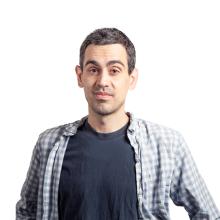
Abstract: Learning new skills requires synaptic plasticity in cortical circuits. How does the brain choose which synapses to change so learning is fast, efficient, and doesn’t degrade earlier skills or memories? Many models have been proposed, including those that underpin modern AI, but few allow direct measurement of connectivity and activity in the same circuit during learning. We developed an all‑optical method that combines large-scale connectivity mapping with a single-neuron brain computer interface, enabling us to track how both neural activity and synaptic connections evolve during learning. Our data support a 3‑factor Hebbian learning framework, in which performance feedback gates synaptic changes to reinforce useful activity patterns. I will also briefly preview ongoing efforts to identify neuromodulators such as norepinephrine, acetylcholine, and serotonin that may carry this feedback signal to the cortex.
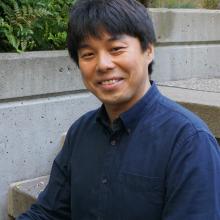
Abstract: Since the discovery of rapid eye movement (REM) sleep, the nature of the eye movements that characterize this sleep phase has remained elusive. Do they reveal gaze shifts in the virtual environment of dreams or simply reflect random brainstem activity? We harnessed the head direction (HD) system of the mouse thalamus, a neuronal population whose activity reports, in awake mice, their actual HD as they explore their environment and, in sleeping mice, their virtual HD. We discovered that the direction and amplitude of rapid eye movements during REM sleep reveal the direction and amplitude of the ongoing changes in virtual HD. Thus, rapid eye movements disclose gaze shifts in the virtual world of REM sleep, thereby providing a window into the cognitive processes of the sleeping brain.Such coordination between eye movements and virtual HD suggests the involvement of the deep layers of the superior colliculus (dSC), a midbrain motor command center that drives eye and head movement to shift gazes during awake navigation. Here, we show that the dSC issues motor commands during REM sleep, e.g., turn left, that are similar to those issued in the awake behaving animal. Strikingly, these motor commands, despite not being executed, shift the internal representation of HD as if the animal had turned. Thus, during REM sleep, the brain simulates actions by issuing motor commands that, while not executed, have consequences as if they had been. These studies suggest that the sleeping brain, while disengaged from the external world, uses its internal model of the world to simulate interactions with it.

Abstract: Computational processes in neural systems emerge through learning across multiple timescales; from evolution and development to immediate, in-context adaptation. Yet fundamental questions remain: Which neural architectures confer evolutionary advantages? How do experiences shape circuit dynamics? What principles govern how specific computations arise during training? My group addresses these questions using simulated recurrent neural networks. Building on a decade of research across multiple labs, we focus on fixed point structures, termed "dynamical motifs”, that serve as computational primitives. We've discovered that these motifs can be flexibly composed to solve diverse tasks, with rapid learning often involving novel recombination of existing motifs rather than construction of entirely new dynamics. However, the principles governing motif composition remain poorly understood, motivating our simulation-based approach.I will present two ongoing projects that illustrate this framework:
- Dynamical motifs underlying foraging behavior: How fundamental dynamical motifs support naturalistic decision-making and navigation.
- How task structure shapes computational dynamics: The relationship between problem structure and the organization of dynamical systems that solve it.