
Upcoming Events
Past Events
Have you ever wondered about how the brain works, how and why neurons interact with each other, how and why neurons “wire up” into functional circuits, and how neural circuits produce behavior? Can we harness this understanding into developing therapies that are beneficial for patients with neurological or neurodegenerative diseases? These and many more are questions on the minds of many Neuroscientists and Clinicians. One way to attempt to answer these questions is by directly interacting with the nervous system using microelectrodes to record neuro-signals or stimulate the neural circuit.
Our research is focused on developing materials and methods for developing the next generation of neural interfaces. We employ standard semiconductor microfabrication techniques to engineer micro and nanoscale materials and develop flexible neural interfaces that enable Neuroscientists to answer some of the questions on their minds. With this method, we could engineer high-density flexible microelectrodes of the same size as neurons and with neuron contact sites that span the breadth and width of the brain. Recently, we developed microelectrodes from amorphous silicon carbide films with a projected lifetime of over a decade when implanted in vivo.
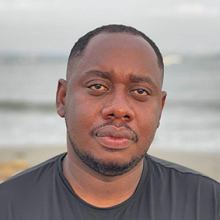
Felix Deku is an assistant professor of neuroengineering at the Knight Campus. His research focuses on the development of chronically reliable neural interfaces for human use. He is also interested in understanding the physiological effects of neuromodulation and their correlations to functional benefit.


Kate Mills is the featured speaker for the annual CSN Fest event. Details for evening talk and dinner hosted for ION trainees to be announced
Abstract: A fundamental task in neuroscience is to characterize the brain’s developmental course. In this seminar, I'll present our efforts to establish robust developmental models of structural brain development from late childhood to young adulthood. I'll describe the individual variability present in key transitions in structural brain development, and present recent work evaluating how measures of human brain maturity correspond with other maturational processes.

This seminar is hosted by trainees in the Genetics Training Program. To learn more please visit molbio.uoregon.edu/genetics-training-program/.
Learn more about Judith Eisen's current research, lab members and ION collaborators.
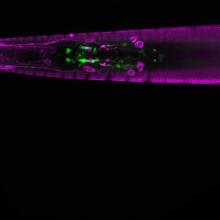
In person or join via Zoom meeting|full_html
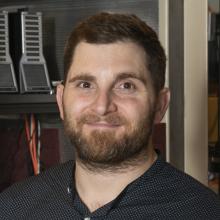
<p>Abstract: Basal forebrain cholinergic neurons (BFCNs) project throughout the neocortex, hippocampus, and amygdala to regulate arousal, stimulus salience, plasticity, and learning. Our research has shown that cholinergic neurons in the extreme caudal tail of the basal forebrain are functionally distinct from more rostral areas. Whereas the activity of rostral BFCNs are closely related to global brain state, caudal tail BFCNs exhibit rapid, low-threshold phasic responses to a broad class of unconditioned auditory stimuli that rapidly reorganize to enhance the representation of threat-predicting sounds. I will describe how plasticity in caudal tail BFCNs can serve as a teaching signal to guide auditory cortex reorganization during associative learning. Finally, I will discuss the history of “hacking” BFCN activity through direct stimulation protocols to produce targeted forms of plasticity in the auditory cortex. I will describe our ongoing efforts to control the activity of caudal BFCNs and select types of cortical GABAergic interneurons to reduce auditory hypersensitivity, a defining phenotype in aging, sensorineural hearing loss, and several neurodevelopmental and neuropsychiatric disorders. </p>
<p><a href="https://scholar.harvard.edu/polleylab/home">Learn more</a></p>
|full_html

<p>Abstract:<br>
Brain-computer interfaces (BCI) translate neural activity into movements of a computer cursor or robotic limb. BCIs are known for their ability to assist paralyzed patients. A lesser known, but increasingly important, use of BCIs is their ability to further our basic scientific understanding of brain function. In particular, BCIs are providing insights into the neural mechanisms underlying sensorimotor control that are currently difficult to obtain using limb movements. In this talk, I will demonstrate how a BCI can be leveraged to study how the brain learns. Specifically, I will address why learning some tasks is easier than others, as well as how populations of neurons change their activity in concert during learning.</p>
<p>Brief bio:<br aria-hidden="true">
Byron Yu received the B.S. degree in Electrical Engineering and Computer Sciences from the University of California, Berkeley in 2001. He received the M.S. and Ph.D. degrees in Electrical Engineering in 2003 and 2007, respectively, from Stanford University. From 2007 to 2009, he was a postdoctoral fellow jointly in Electrical Engineering and Neuroscience at Stanford University and at the Gatsby Computational Neuroscience Unit, University College London. He then joined the faculty of Carnegie Mellon University in 2010, where he is a Professor in Electrical & Computer Engineering and Biomedical Engineering and the Gerard G. Elia Career Development Professor. He is broadly interested in how large populations of neurons process information, from encoding sensory stimuli to driving motor actions. His group develops and applies novel statistical algorithms and uses brain-computer interfaces to study brain function.</p>
<p><a href="https://users.ece.cmu.edu/~byronyu/">Learn more</a></p>
|full_html