
Abstract
How does music processing relate to social cognition? This presentation discusses recent research in the social and affective neuroscience of music listening, specifically how music relates to empathy. Reporting results from recent experiments examining the effects of individual differences in trait empathy and empathic accuracy on music processing (using neuroimaging and behavioral techniques), I argue that empathic processes are as essential to musical behaviors as they are to our navigation of the social world. Recent evidence suggests that certain aspects of music may have piggybacked on neural architecture that originally evolved for social interaction. I close with a brief discussion of some exciting future developments at the interface of music cognition and empathy research.
Bio
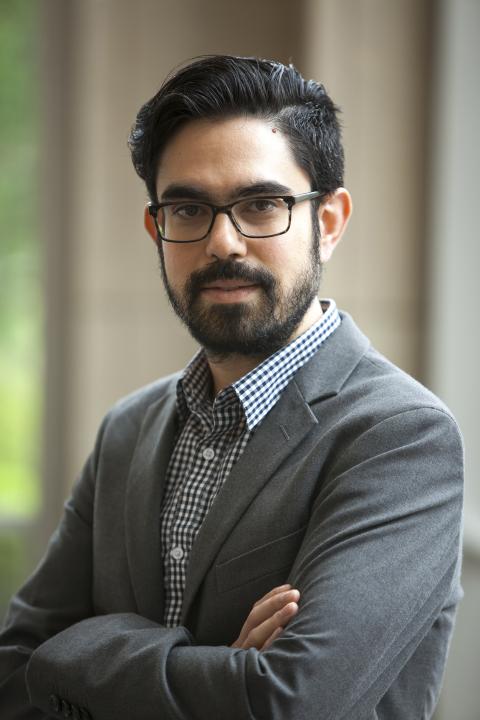
Zachary Wallmark is Associate Professor and Area Chair of Musicology at the University of Oregon, where he also holds an affiliate faculty appointment with the Center for Translational Neuroscience. Working at the intersection of the cognitive sciences and musicology, Wallmark’s research seeks to account for social cognitive dimensions of musical practices, focusing on the role of timbre in affective response, aesthetic judgment, and music sociology, particularly in the context of post-1945 American popular music. He is author of Nothing but Noise: Timbre and Musical Meaning at the Edge (Oxford, 2022) and co-editor of the AMS Solie Award-winning volume, The Relentless Pursuit of Tone: Timbre in Popular Music (Oxford, 2018), among numerous articles in both humanistic and scientific journals. His work has been supported by the NEH and the Grammy Museum Foundation.